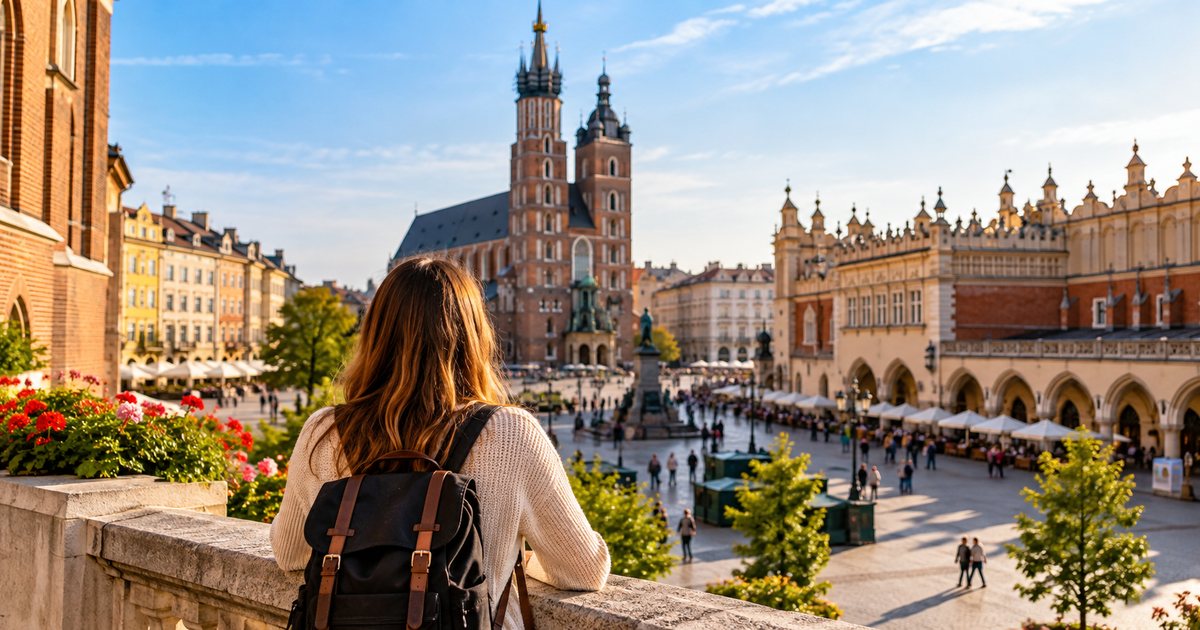
So, you're moving to Poland. Maybe it's a new job, a relationship, family roots, or simply the irresistible idea of living somewhere that takes both bread and soup very seriously. Whatever brought you here, welcome. I'm going to help you get the boring-but-important things sorted before they turn into expensive surprises.
Poland is a wonderful place to build a life. It's also a place where one perfectly innocent question—“Which document do I need?”—can produce three different answers depending on who you ask. The trick is knowing which office handles what, and in what order.
A quick reality check: This is a practical starting point, not individual immigration or legal advice. Your citizenship, reason for moving and personal circumstances determine the rules. For legal deadlines, follow the current instructions from Polish authorities, not somebody's confident comment in a Facebook group.
1. Before booking anything: can you legally live here?
This is the least glamorous question on the list and the one I'd put first. A cheap flight is lovely. Discovering that your plan to stay for a year only allows a short visit? Less lovely.
If you're an EU citizen: You generally have the right to enter and work in Poland under EU free-movement rules. For stays longer than three months, registration of your residence with the voivode is normally required; special circumstances, including certain jobseekers, can change the details. That's not the same thing as registering your street address.
If you're not an EU citizen: Check whether you need a visa, a residence permit, work authorization or another legal basis. Many visa-exempt visitors are limited to 90 days in any rolling 180-day Schengen period. Being allowed to visit does not automatically mean you're allowed to move here or take a job.
What I'd do: Write down your nationality, purpose of stay, intended arrival date and expected length of stay. Then check the official route for that exact combination. “My friend moved here last year” is not a legal category.
2026 update: Poland introduced electronic submission through the MOS portal for the main residence-permit application categories covered by the new system from April 27, 2026. Don't assume every immigration procedure uses the same channel. Check the Office for Foreigners' MOS guidance before applying.
2. Your document folder: the most boring thing you'll be grateful for
I know. Nobody dreams of moving abroad to become a collector of photocopies. But bring the documents before you need them, because asking your home country for one missing certificate from another continent is nobody's idea of a fun Tuesday.
- Valid passport or qualifying national identity document.
- Visa, residence or employment documents, where applicable.
- Birth and marriage certificates if your circumstances require them.
- Employment offer, university acceptance or proof of income, as relevant.
- Medical records, prescriptions and proof of insurance.
- Driving licence and relevant vehicle paperwork.
- Digital backups stored securely, plus accessible paper copies.
Some foreign documents need an apostille or legalization, and some offices require a sworn translation into Polish. Check the exact requirement before paying a translator. Translating everything “just in case” is a surprisingly efficient way to spend money you could have used for pierogi.
3. Pick a city for your actual life, not just your Instagram
Warsaw has major employers and a fast pace. Kraków offers a historic centre and a sizeable international community. Wrocław, Poznań and Gdańsk are worth researching too. Smaller cities can offer a different pace, but English-language services and job options may be more limited.
Here's the question I want you to ask: What does an ordinary Wednesday look like? How long is the commute? Is there a grocery store nearby? Can you reach a clinic? Is the neighbourhood still convenient in November, when it's dark early and you're carrying shopping bags in the rain?
Compare the whole monthly budget, not just the apartment listing. A slightly cheaper flat with a difficult commute can cost you time, transport money and patience.
4. Renting: that advertised price might not be the final price
Let's say you find a beautiful apartment advertised for 3,000 zł a month. Great! But before you start mentally arranging the furniture, ask what's included. In Poland, the amount advertised may not cover building administration fees, heating, electricity, water or internet.
You'll see a few Polish words repeatedly:
- Wynajem / najem — renting / tenancy.
- Czynsz — a word that can refer to rent or certain housing charges depending on context. Ask for an itemized breakdown.
- Opłaty administracyjne — building or administration charges.
- Kaucja — refundable security deposit, subject to the contract and lawful deductions.
- Umowa najmu — rental agreement.
- Najem okazjonalny — a special lease arrangement with additional legal formalities.
My apartment checklist: Ask for the total expected monthly payment, what is fixed versus metered, the deposit, notice period, inventory, heating type and whether the landlord can provide documents needed for address registration. Take dated photos at move-in. And please don't transfer a large deposit to someone whose right to rent the property you haven't checked.
5. PESEL: useful number, not a magic immigration card
You'll hear “Do you have a PESEL?” so often that you may start wondering whether it's a secret Polish membership number. It isn't. It's an identification number used across government and many everyday systems.
Foreigners who register an address for a stay exceeding 30 days are generally assigned a PESEL automatically. If you cannot register an address, you may be able to apply separately when a specific legal provision requires one. The government service for assigning a PESEL is free.
Here's the distinction worth remembering: PESEL does not give you the right to remain in Poland or work here. It's an administrative identifier. The official PESEL instructions explain the procedure.
6. Meldunek: yes, another registration—and no, it's not the same one
Meldunek is address registration with the local municipality. It records where you're staying; it doesn't replace your visa, residence permit or EU residence registration. I know the names all sound like different levels of the same video game. Unfortunately, they're separate administrative tasks.
Requirements and deadlines depend on citizenship and circumstances. Ask the municipal office what proof of occupancy it needs, and check the government's address-registration guidance. Don't assume your landlord has registered you just because you signed a lease.
7. Healthcare: find out what you're covered for before you need it
Poland's public system is associated with NFZ, the National Health Fund. But living in Poland does not automatically mean you have public health coverage. Your entitlement may depend on employment, insurance contributions, eligible family coverage, studies or another legal basis.
Before you move, find out when your coverage begins and whether you need temporary private insurance. If you're taking regular medication, bring the necessary documentation and check whether it's available under the same name in Poland.
For a medical emergency, call 112. For routine care, work out which clinic or provider you can actually use. It's a much nicer task to do while healthy.
8. Money: budget for the first month, not just the first weekend
Poland belongs to the EU but uses the Polish złoty (PLN), not the euro. You can pay by card in many places, but don't build your entire arrival plan around a single payment method.
I'd make a simple budget with separate lines for travel, temporary accommodation, deposit, first rent payment, building charges, utilities, groceries, transport, insurance and an emergency reserve. If your salary will arrive after the first month, plan for that gap.
Bank account requirements vary. One bank may ask for a different set of identification and residence documents than another. Compare account fees and currency-conversion costs, especially if you'll be paid abroad.
9. Work: the contract type really matters
Don't just ask what the salary is. Ask what kind of contract you're being offered and what the quoted amount means.
- Umowa o pracę: an employment contract governed by labour law.
- Umowa zlecenie: a civil-law services contract with different rules.
- B2B: a business-to-business arrangement that generally means operating your own business.
These can differ in tax treatment, social insurance, leave and protections. Also, for non-EU citizens, the right to live in Poland and the right to work are related but not interchangeable. Confirm both before your first shift. A recruiter saying “it should be fine” is not an official decision.
10. Your phone will become your unofficial office assistant
A local phone number makes appointments, delivery notifications and bank verification easier. Compare prepaid and contract plans, and check what identification is needed to activate one.
You'll also encounter Profil Zaufany (Trusted Profile), used to authenticate eligible government transactions online, and mObywatel, Poland's official digital-services app. They're genuinely useful, but not every function is available to every foreign resident. Check eligibility before counting on a particular feature.
11. Getting around without making everything complicated
In larger cities, public transport can be an excellent alternative to driving. Warsaw has a metro; many cities have trams and buses; intercity rail connects major destinations. Check the local ticket system because a ticket that works in one city won't necessarily work in another.
If you plan to drive, verify whether your licence is recognized and whether you need an International Driving Permit or eventual licence exchange. Rules depend on where your licence was issued and your circumstances. “I drove with it on holiday” is not the same as “I can keep using it indefinitely as a resident.”
12. Six Polish phrases that will earn their place in your pocket
You don't have to speak fluent Polish on arrival. You should, however, learn a few phrases before your first visit to a post office, pharmacy or municipal office.
- Dzień dobry — Hello / good day.
- Dziękuję — Thank you.
- Proszę — Please / you're welcome, depending on context.
- Przepraszam — Excuse me / sorry.
- Nie mówię po polsku — I don't speak Polish.
- Czy mówi Pan/Pani po angielsku? — Do you speak English?
And one cultural note: a stranger looking serious isn't necessarily annoyed with you. Not every country requires a customer-service smile at all times. A polite dzień dobry goes a long way.
My realistic moving timeline
Two to three months before
- Verify the legal basis for your stay and, if relevant, work.
- Check passports, certificates, translations and insurance.
- Compare cities using total living costs and actual commuting time.
One month before
- Book initial accommodation and confirm arrival logistics.
- Organize important documents and secure copies.
- Check medication rules, banking options and phone plans.
First week after arrival
- Make sure your accommodation is legitimate and documented.
- Find your municipal office and confirm applicable registration deadlines.
- Sort out phone access, transport and healthcare arrangements.
First month—and any earlier legal deadlines
- Complete required registrations by their actual deadlines, which may be earlier than one month.
- Arrange PESEL if eligible and necessary.
- Confirm your employment, insurance, tax and residence obligations.
One more tip: keep a simple note with the name of each office, the date you contacted it and what documents it requested. You'll thank yourself later.
Five mistakes I'd avoid
- Confusing visiting with moving. Short-stay entry rules don't automatically cover long-term residence.
- Treating PESEL as immigration status. It isn't.
- Budgeting only for advertised rent. Ask about every additional charge.
- Assuming a job offer settles work authorization. Verify the legal route.
- Leaving paperwork until the deadline. Offices and documents rarely move faster because you're stressed.
Quick questions people ask
Can I move to Poland without speaking Polish?
Potentially, yes—language ability and immigration eligibility are separate questions. Daily life will be easier with some Polish, especially outside major cities.
Does every foreigner need a PESEL?
Not everyone needs to apply separately. Some people receive one automatically through qualifying address registration; other situations have different requirements.
Can I work while visiting as a tourist?
Don't assume you can. Work authorization depends on nationality and status, among other factors.
Can I apply for residence online in 2026?
Key residence-permit categories covered by MOS use electronic submission under the system introduced April 27, 2026. Check the official instructions for your category.
One last thing before you pack
Moving countries is not one giant task. It's fifty small tasks, a few confusing acronyms, and the occasional moment when you wonder why one office wants a document issued by another office. Start with legal status, housing and healthcare. Everything else becomes easier when those foundations are solid.
And once you're settled? Go find a good bakery. You deserve at least one reward that doesn't involve a queue or a form.
Official sources worth bookmarking
- Office for Foreigners — MOS guidance
- Office for Foreigners — electronic applications
- Polish government — entry and residence rules
- Polish government — PESEL for foreigners
- Polish government — address registration
- National Health Fund (NFZ)
Last editorial review: October 25, 2026. Rules and office procedures can change; confirm current requirements with the relevant authority.